Skills framework starter kit
An open-source kit to help you design and publish your own human and AI-readable skills framework
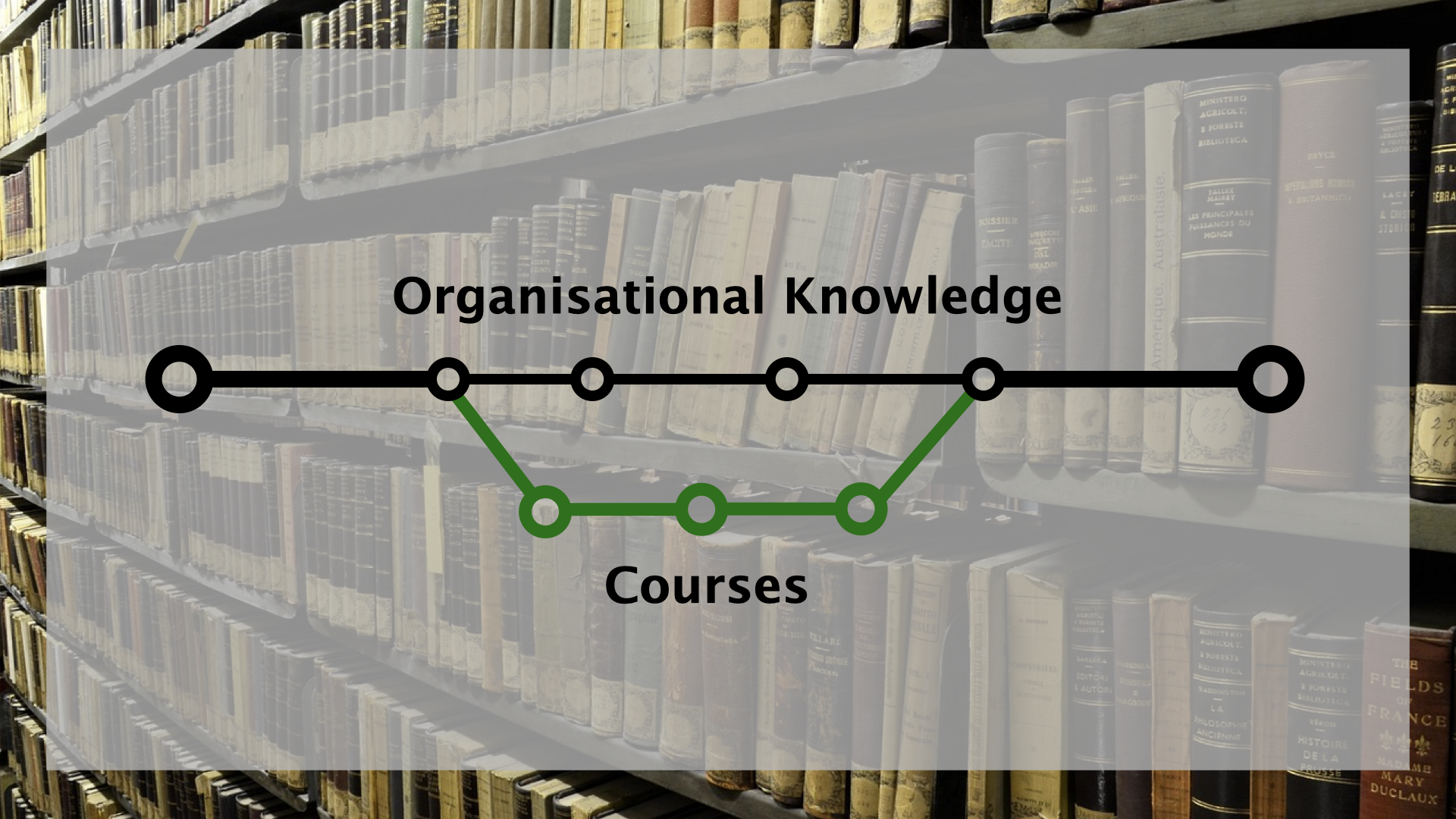
For the past 20 years, for many L&D teams, their output has been defined by creating course packages - using authoring tools like Articulate Storyline, Rise, Gomo and the rest.
Creating these course packages (usually called SCORM packages) often involves a rigorous process - interviewing subject matter experts, instructional design, multiple sign-off stages, and solid testing regimes.
The overall end result is a repository of organisational knowledge, held within the Learning Management System.
“Held” is probably the best word to use here. The Learning Management System, and the SCORM format has acted like a cage around the content. In the best cases, users might be able to share links to courses - but not to individual screens or sections within in them. With some LMSs, even this was impossible.
In most cases, you’d come across the content either because the LMS/HR system combination had assigned the course to you, or you might be browsing the course catalogue, or you might be lucky enough to enter a search term that was in the title or description of the course.
There was no way to search inside the course packages unless you were inside them in the first place. No way to get to specific, granular pieces of knowledge, and no way to get answers to questions.
Unfortunately, this has led to many of the course packages providing extremely limited value to their organisations - despite the work that’s gone into them.
In the past year this has all changed.
The engineers behind tools like Talvi, Filtered and Thrive have uncovered ways to unpack SCORM packages, even from within the LMS, and make them even more useful.
You can now search the packages from outside of them. You can ask organisational chatbots and expect answers generated from the courses. And, in some tools, even ask for a course custom-created for your specific needs.
In my opinion, this is a transitional state, to help us get back en route.
The course as the default unit of learning was a detour leading to a dead-end.
Two decades ago, the organisational intranet was big news. Not just the software systems to drive it, but also the governance and skills needed to ensure effective knowledge management. At a similar time, Google launched their Search Appliance - a server that sat inside an organisation’s server cabinet and did for the organisation what Google Search was doing for the general public - making information much more easy to find.
Unfortunately the intranet became a clunky, outdated repository where PDFs went to die. Governance quickly fell by the wayside. The shiny intranet was now a dumping ground for content - with multiple versions, no clear metadata and no lifecycle management.
And the Google Search Appliance was stopped as a product 14 years after launching because a) it didn’t fit Google’s new cloud-first operating model, and b) it became increasingly difficult to handle the complex security architectures prevalent in many large organisations.
Over that time, L&D unwittingly became the well-governed repository of organisational knowledge - as long as it was bundled as a course… We had the people, processes and technology designed to turn the organisation’s knowledge into something useful.
That is still true. What’s changed now is what we mean by something useful.
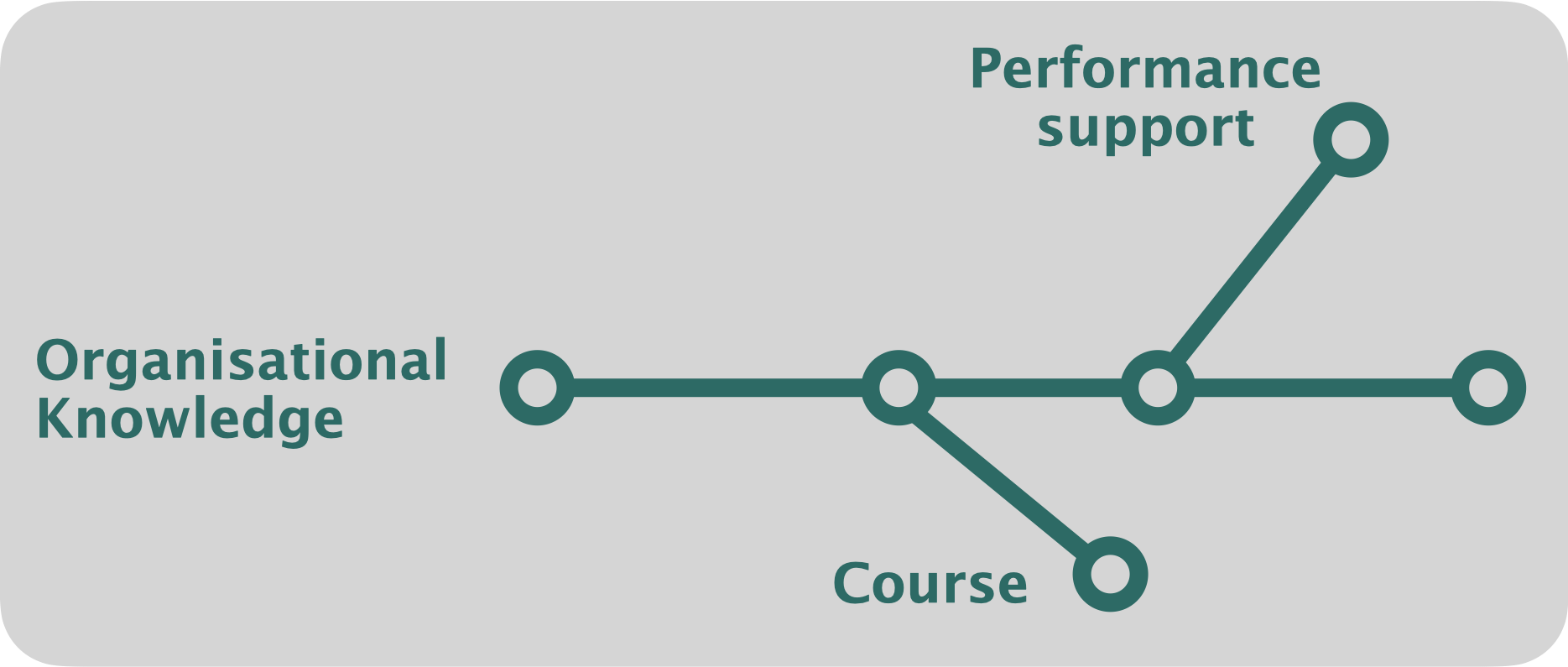
Instead of courses, I propose that L&D changes its focus to creating granular chunks of knowledge. The building blocks from which people will get performance support and/or courses - depending on their specific needs.
Rather than giving people the finished product, we’d be giving them Lego™ blocks from which they (or their AI more likely) can create something bespoke for them, when they need it.
These building blocks are more likely to be things like answers to frequently asked questions, policy documents, standard operating procedures, call centre scripts and product descriptions.
The tools and the outputs might change, but the processes would remain roughly the same:
With a new focus on knowledge management and granular knowledge objects, L&D would be set up for the long term.
If you'd like to discuss this article, or how I can help you, get in touch.
Posted: 24 May 2026
Tags: Informal learning Solution design Content management
An open-source kit to help you design and publish your own human and AI-readable skills framework
Rebalancing the spend on learning by building a target operating model for informal learning
Practical habits non-coders can use with AI coding tools to reduce risk and build maintainable, reliable solutions.
How we can now move away from the course being the default unit of learning
With the rise of the AI content creation tools, do we still need elearning authoring software?
A dive into this new technology